Pocket-Sized Proof: Why a Tiny Souvenir Shelf Is 2026’s Coziest Decor Move
Every so often, a decorating trend sneaks up not from a design showroom but from the bottom of a junk drawer. In 2026, the unlikely star is the tiny souvenir: the matchbook from a roadside diner, the pressed penny from a national park machine, the hotel keycard you almost threw away, the free postcard from a museum lobby. Instead of hiding these little scraps in shoeboxes, people are giving them a shelf.
Not a grand, glass-cased museum shelf. More like a small ledge, a tray, a shadow box, or one tidy corner where a handful of odd little objects can do their thing. The result is part travel diary, part conversation starter, and part anti-minimalist rebellion. In a year when so much of home decor still feels algorithm-approved, a shelf of weird little keepsakes feels refreshingly human.
Why Micro-Souvenirs Suddenly Feel Like Home
Big statement pieces are fine, but they tend to say the same things: look at this vase, admire this lamp, please ignore the dust. Tiny souvenirs say something stranger and more specific. They say: I once ate a questionable chili dog in a town I can’t fully pronounce. They say: this keycard opened a motel room with carpet the color of a sunset gone wrong. They say: I was there, and it cost me forty-nine cents.
That specificity is the point. In 2026, a lot of home decorating is drifting toward personal texture over polish. People want rooms that feel lived in, not staged. Micro-souvenirs deliver that without requiring a renovation budget. A matchbook, a token, a ticket stub, a sugar packet from a diner that no longer exists — these are the cheap, tiny, deeply unrepeatable artifacts of a life.
The trend also has a practical appeal. Small objects are easy to store, easy to move, and easy to rotate. They don’t demand a whole wall. They just need a little intention.
The Helinula Shelf, Explained
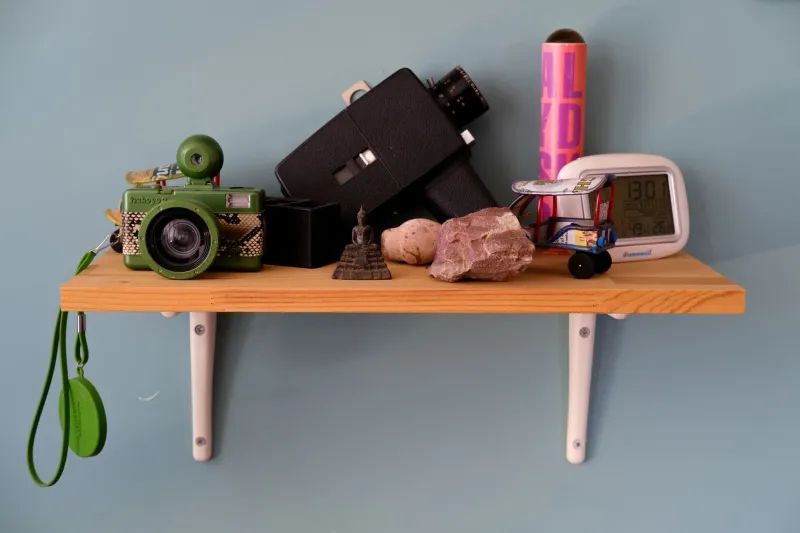
Here at Helinulas, we’ve started calling the finished display a helinula shelf: a small, curated landing zone for odd little finds. The name is less important than the idea. A helinula shelf is not a dumping ground. It is a tiny museum with a sense of humor.
The rules are simple. Keep it small. Give each object a little breathing room. Let the weird stuff earn its place. If a souvenir makes you smile, wonder, or wince in a fond way, it is probably shelf-worthy. If it makes you shrug, it can go.
A helinula shelf can live on a bookshelf, a windowsill, a bathroom ledge, a kitchen counter, or a narrow wall shelf above a desk. It can be a single tray on a coffee table. The container matters less than the editing.
How to Curate Without Crossing Into Clutter
Start with a limit. Twelve to twenty objects is plenty for a small display. If you have more, rotate them. A seasonal swap — summer postcards in July, matchbooks in fall, pressed pennies whenever — keeps the shelf from becoming wallpaper.
Group by feeling, not by trip. A cluster of red-and-yellow matchbooks looks intentional even if they came from five different states. A row of hotel keycards in a small frame reads like a tiny art piece. Pressed pennies can live in a shallow coin dish or a small shadow box. Free postcards can lean against the wall as a backdrop.
Ask yourself three questions before adding something. Does it trigger a real memory? Does it add a different shape, color, or texture? Would I notice if it disappeared? If the answer to all three is no, it can live in storage instead.
Styling Tips That Make Small Stuff Look Intentional
Use negative space. A tiny object surrounded by a little emptiness looks curated. A tiny object buried in a pile looks like a drawer that escaped.
Mix heights and textures. A flat postcard wants a small box or a coin beside it. A chunky matchbook wants a thin keycard nearby. A pressed penny looks lonely unless it has a friend.
Let one object be the weirdo. Every shelf benefits from a conversation piece: the ugliest magnet, the mystery token, the hotel keycard with a faded cartoon mascot. That is the thing guests will pick up.
Light it simply. A small lamp, a nearby window, or even a battery-powered puck light can make tiny objects feel deliberate. You do not need museum lighting. You just need to be able to see the details.
Storage and Display Tricks for Real Life
Keep the overflow organized, not hidden forever. A small acid-free box, a labeled envelope, or a binder with postcard sleeves can hold the extras. Write the story on the back of the postcard or on a tiny label under the object. Future you will forget why the keycard mattered.
For matchbooks, keep them away from open flames and curious kids. For pressed pennies, a simple coin tray or jewelry dish works. For hotel keycards, a business-card binder or a small frame is easy and cheap. For ticket stubs, a clear sleeve or a small archival box keeps them from fading too fast.
Dusting is part of the deal. Tiny objects collect tiny dust. A soft brush and a monthly pass will keep the shelf from looking abandoned.
Turn the Shelf Into a Story Prompt
A helinula shelf is also a social object. It gives guests something to ask about, and it gives you a reason to tell the story again. Try these prompts when you are arranging or sharing your shelf:
- What is the ugliest thing on this shelf, and why did it survive?
- Which object cost less than a dollar?
- Which one has a smell, a sound, or a texture you remember?
- Which one almost got thrown away?
- What is the shortest trip represented here?
- Which object would you rescue first in a fire?
Those questions turn a display into a tiny oral history. They also make great captions if you share your shelf online. The point is not to prove you went somewhere impressive. The point is to prove you noticed something small.
A Small Shelf, a Bigger Point
In 2026, cozy does not have to mean candles and chunky blankets. Sometimes cozy is a shelf of tiny proof that you have been alive, curious, and willing to pocket a free postcard. A helinula shelf does not need to be expensive or perfect. It just needs to be yours.
So before you toss the next matchbook, keycard, or pressed penny, ask whether it deserves a little square of real estate. The answer might be yes — and your shelf might become the most interesting thing in the room.