The Skyline's Handshake: How Painted Water Tanks Became Small-Town America's Loudest Hello
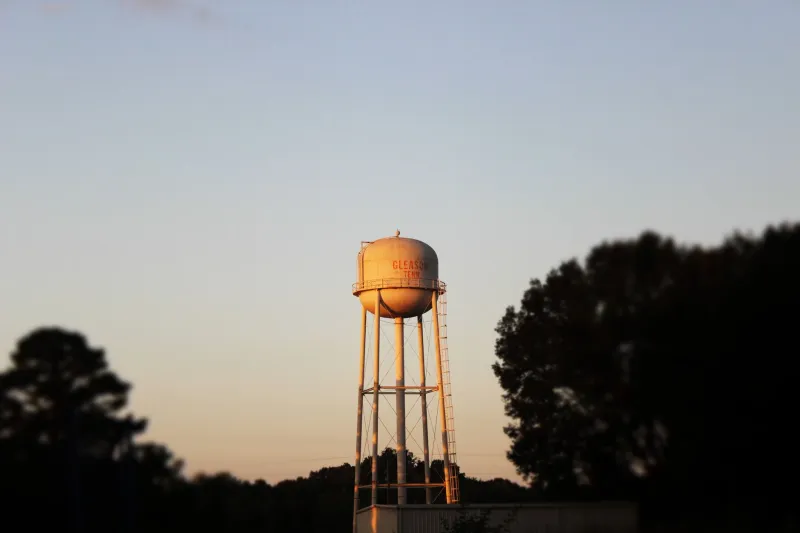
There is a particular moment on a rural highway when the fields give way to a water tower. You crest a low hill, and there it is: a giant ear of corn wearing sunglasses, or a high school mascot with a slightly unhinged grin, or the words “HOME OF THE FIGHTIN’ FERRETS” stretched across a tank that holds half a million gallons of municipal drinking water. It is not art in a gallery. It is art with a job.
In an era when every strip mall looks like every other strip mall, these sky-bound billboards feel like a hometown handshake. They are odd, specific, and stubbornly local. And they are also a quiet lesson in civic decision-making, small-town logistics, and the strange affection Americans have for infrastructure that has been dressed up like a parade float.
A Canvas With a Job
Water towers are not designed to be charming. They exist to maintain pressure in the pipes, provide emergency storage, and keep the fire department from running dry. Most are steel cylinders perched on legs or a single pedestal, utilitarian shapes that engineers perfected decades ago. But once a town owns a giant elevated surface visible from three exits, the temptation to decorate is apparently irresistible.
The result is a kind of folk art that lives somewhere between a welcome sign and a school yearbook. A graduating class may get its year painted in letters ten feet tall. A local factory might sponsor its logo. A town might celebrate its most famous crop, its winningest sports team, or an inside joke that makes sense only to people who have lived there for at least a decade. In some places, the tower is repainted every fifteen to twenty years, which means the design becomes a slow-moving time capsule: a class of 1998, a faded slogan, a mascot that no one under forty recognizes but everyone respects.
What makes these paintings unusual is their scale. A mural on a brick wall is neighborhood art. A mural on a water tank is civic branding, weather report, and landmark all at once. It can be seen from the next county. It shows up on wedding invitations and real estate listings. It is, in the most literal sense, the town’s highest-profile public face.
How a Town Picks Its Face
Choosing the design is rarely as simple as “let’s paint a big fish.” In most towns, the process involves a city council, a utilities department, a local arts commission if one exists, and at least one passionate citizen who has strong opinions about whether the mascot should be the old one or the new one. Sometimes a high school art class submits sketches. Sometimes a local sign painter gets the call. Sometimes there is a vote, and sometimes there is a meeting that lasts longer than anyone expected.
The best designs tend to be simple, readable from a distance, and a little bit weird. A giant peach is legible from a mile away. A detailed landscape scene is not. A slogan in a cursive font will turn into a squiggle at highway speed. A bold mascot with a thick outline will survive sun, hail, and the inevitable pigeon.
Towns also have to consider the tank’s shape. A cylindrical surface curves, which means the painter is working on a canvas that fights back. Letters need to be laid out to account for the bend. A mascot’s face can look cheerful from one angle and slightly distorted from another. This is part of the charm. It is also part of the headache.
The Logistics of Painting the Sky
Maintaining a painted water tank is not like touching up a fence. It involves permits, safety harnesses, scaffolding, and painters who are comfortable working at heights that make most people’s knees feel strange. The tank has to be drained or isolated, the surface prepped, the old paint removed or overcoated, and the new design applied in weather that cooperates. The cost can run from tens of thousands of dollars into six figures, depending on the size of the tank and the complexity of the artwork.
Then there is the question of fading. Sun is relentless. Hail is occasional but memorable. A design that looks crisp in July may look pastel by the following spring. Many towns plan for a repaint cycle the way they plan for road resurfacing: it is not glamorous, but it is part of the budget. Some utilities departments keep a file of the original design so that future painters can reproduce it. Others embrace the drift and let the tower evolve, which is how you end up with a mascot that looks like it has been through a few things.
There is also the matter of taste. Not every idea that sounds good at a council meeting looks good four hundred feet in the air. A detailed portrait of a local founder can become an unintentional horror movie poster at dusk. A joke slogan can wear thin after a decade. But the towns that get it right tend to get it very right: a design that is proud without being pompous, specific without being exclusionary, and just odd enough to make a traveler slow down.
Why the Handshake Still Matters
In 2026, it is easy to feel like American towns are converging. The same few chains, the same few apps, the same few styles of new apartment building. The painted water tank is a small, stubborn counterargument. It says: this place has a crop, a team, a story, a sense of humor. It says someone here cared enough to climb up and paint it. It says you are arriving somewhere, not just passing through.
That is why people photograph them. Not because they are fine art, but because they are honest. A water tank with a grinning mascot and a class year is not trying to be sophisticated. It is trying to say hello. And in a country full of generic exits, a giant, fading, slightly crooked hello is worth pulling over for.